
What is Video Interaction?
Video interaction refers to videos that respond to user input, provide contextual feedback, and lead people through journeys with multiple paths. Unlike traditional one-way video, these experiences adapt based on what the viewer does.
The most demanding proving ground for this work has been retail. Attention is scarce, decisions are fast, and results are measured in clicks and conversion. Techniques that survive that environment transfer powerfully to B2B and life sciences — sectors where engagement, comprehension, and correct decisions carry far higher stakes.
We can share results from some agency-delivered retail work more readily than work serving defense or life-sciences end clients. The underlying methods, however, are the same — and often more demanding when applied to regulated or high-stakes professional environments.
Why Interactive Video Matters
Static video is no longer enough to hold an audience. On social platforms, dwell time often falls under four seconds. People stay longer when they are actively involved. Interactive video consistently produces higher engagement, clearer personalization, and stronger conversion or learning outcomes.
The same mechanics that drive results in retail — meaningful choice, responsive paths, and detailed interaction data — become even more valuable when applied to professional training, complex product education, and regulated communication.

Retail: The High-Velocity Proving Ground
In retail, interactive video functions like a digital sales associate. Viewers can explore options inside the video, make choices that change what they see next, and move quickly toward a decision. Shoppers increasingly expect to self-direct visual experiences that reflect their interests rather than watch a fixed sequence.
In projects delivered through agencies, repurposed LL Bean commercials averaged 5.54 views and 3.68 product-page click-throughs per viewer. A swimsuit retailer sustained engagement for 1 minute 40 seconds and achieved a 61% click-through rate. These results come from environments where attention is expensive and measurement is unforgiving.
Learning and Professional Decision-Making
The same principles apply with even higher consequence in training and professional development. Interactive video can embed questions and feedback directly into the experience, allow learners to practice realistic decisions, and adapt paths based on demonstrated understanding.
By adding interactivity to three-minute golf training videos for the United States Golf Association, average dwell time moved from 38 seconds to 7 minutes 58 seconds. Scenario-based approaches turn abstract information into practiced judgment, which is exactly what regulated industries and complex B2B sales environments require.

From Broadcast to Responsive Experience
Modern professional communication needs relevance more than reach. Interactive video allows different paths and messaging based on user choices or behavior, captures meaningful interaction data, and creates experiences that feel guided rather than purely broadcast.
The result is longer engagement, better retention of complex information, and clearer visibility into what people actually understand and choose.
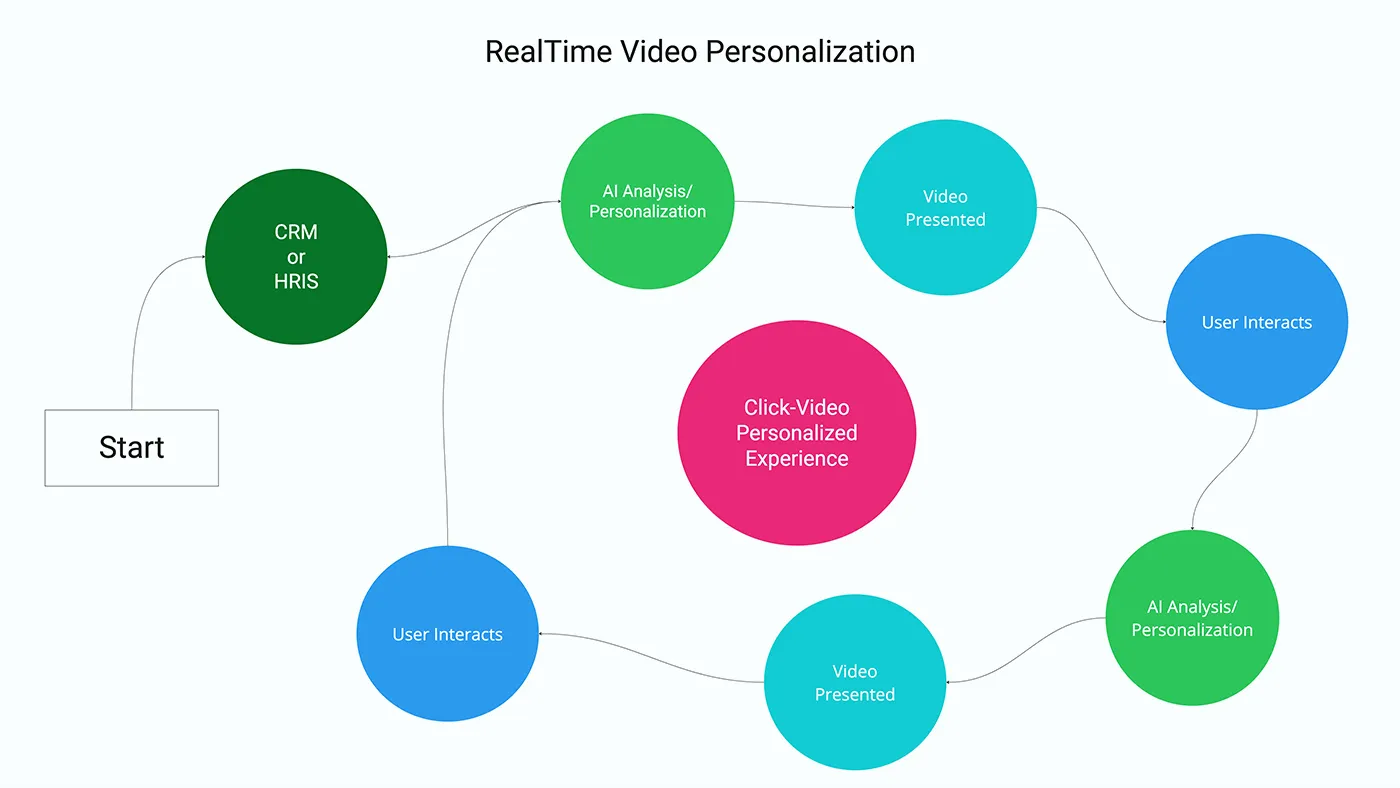
The Role of AI and Agents
AI and browser-delivered agents now make it practical to personalize pathways at scale, deliver conversational responses, and adapt content in real time based on user behavior. Avatars and conversational interfaces can serve as instructors, guides, or product specialists while still operating inside controlled, measurable experiences.
These capabilities matter most when the audience is professional, the content is complex, and the cost of misunderstanding is high.
Best Practices
When designing interactive video experiences, a few principles consistently hold:
- Start with purpose — Be clear about the decision, understanding, or behavior the experience should produce.
- Guide without trapping — Offer clear paths and visible choices so users maintain a sense of control.
- Design for the actual device — Most professional use still happens on phones and tablets in short windows of time.
- Instrument everything — Path data, drop-off points, and choice patterns are as important as completion rates.
- Close the loop — The experience should respond to choices with meaningful next steps, not just acknowledge the click.
Looking Ahead
Interactive video is moving rapidly toward conversational, agent-driven, and simulated experiences. Real-time avatars, dynamically assembled content, and realistic practice environments are becoming practical. Organizations that treat these capabilities as core rather than experimental will hold an advantage in both learning and commercial communication.
Conclusion
Interactive video captures attention, improves decision quality, and strengthens understanding. The methods that perform under the intense pressure of retail become especially powerful when applied to life sciences, enterprise learning, and other high-stakes professional environments.
The technology does not replace expertise or relationships. It creates better conditions for both.
Working on an agency brief? Send the scope or request a private walkthrough of work that matches the end-client sector and constraints.